
Estimated reading time: 5 to 7 minutes.
Key Takeaways
- Always secure your dog in the back seat using a crash-tested harness, a secured carrier, or a crated setup in the cargo area.
- Front-seat airbag deployment poses a serious injury risk to dogs of any size, so the back seat is always the safer option.
- Limit food 3 to 4 hours before a drive to reduce the chances of motion sickness.
- Bring water, a familiar item from home, and plan a stop every 2 hours on longer trips.
- For dogs with severe travel anxiety, talk to your vet about sedative or supplement options before the next ride.
At All American Pet Resorts, we know your dog goes everywhere with you. Whether you're driving to the vet, heading to the park, or dropping your pup off for a stay at our resort, knowing how to travel with a dog in the car safely makes the trip better for both of you.
Most dogs don't naturally take to car rides. Some get anxious. Some get sick. Some turn into a moving obstacle, blocking your view of the road.
A few intentional steps solve all of these problems and make every trip something you and your dog look forward to. We’re here to offer some helpful tips!
Why Car Rides Are Hard for Many Dogs
Dogs face real physical and behavioral challenges inside a moving vehicle. Understanding what causes those challenges helps you solve them before the next trip.
Here are the most common problems dogs experience when traveling in a car:
- Motion Sickness: Nausea and vomiting triggered by vestibular system overstimulation, especially common in puppies
- Anxiety: Panting, whining, drooling, or trembling from stress or unfamiliar movement
- Unrestrained Movement: Jumping between seats, blocking driver visibility, or becoming a projectile during hard braking
- Overheating: Dangerous body temperature spikes from direct sun exposure through rear side windows
- Restlessness: Inability to settle, particularly on drives longer than 30 minutes
Most of these problems don't require expensive gear or a vet visit to fix. The right restraint system, a controlled environment, and a familiar item or two address the majority of them before you leave the driveway.
How to Keep Your Dog Safe in the Car
The safest way to travel with a dog in the car is to keep your dog secured at all times. For example, a 60‑pound dog in a 35 mph collision can become a 2,700‑pound projectile, so keeping your dog properly restrained is essential to protect both your pet and your ability to control the vehicle.
Dog Restraints and Carriers for Car Travel
Choose your restraint system before the first trip, and introduce your dog to whichever option you select at home before driving anywhere. Here are the three options worth considering:
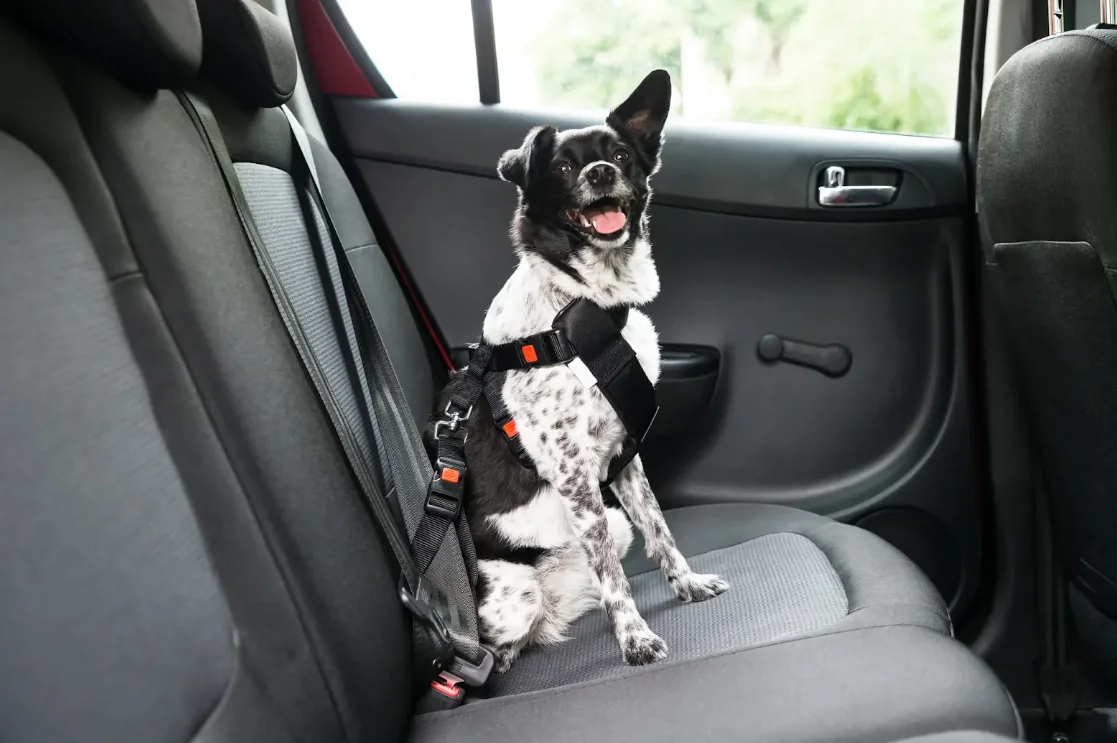
- Crash-Tested Dog Harness for Car Travel: A harness can attach directly to your vehicle's seat belt. These distribute impact force across the chest rather than the neck and keep your dog seated in one position throughout the drive.
- Dog Carrier for Car Travel: A hard-sided plastic carrier secured with the rear seat belt works well for dogs under 25 pounds. Run the seat belt through the carrier handle or around the body of the carrier to prevent sliding.
- Secured Dog Crate in the Cargo Area: For large breeds, a wire or aluminum crate secured in the cargo area of an SUV or station wagon provides the most space and prevents forward movement during sudden stops.
Whichever system you use, let your dog wear or sit in the restraint inside the house for 10 to 15 minutes before the first drive. A familiar experience with the gear reduces stress once the vehicle is in motion.
Are Dogs Safer in the Front or Back Seat?
No matter the size, dogs are always safer in the back seat. Front-seat airbag deployment poses a serious injury risk to dogs of any size, regardless of the restraint type used.
How to Keep Your Dog Comfortable in the Car
A comfortable dog is a calm dog, and a calm dog makes for a safer drive. Comfort in the car comes down to temperature, familiarity, and physical ease during the trip.
Preparing your dog's environment before you leave takes less than five minutes and makes a noticeable difference, especially for anxious or motion-sensitive dogs.
Setting Up a Comfortable Environment for Your Dog
In order to ensure a smooth drive for both you and your pup, here’s a checklist you can work through before you get going:
- Limit Food Before Departure: Feed your dog 3 to 4 hours before the drive to reduce the likelihood of motion sickness.
- Bring Water and a Collapsible Travel Bowl: Offer water at every stop and immediately upon arrival. Dogs in cars dehydrate faster than owners expect.
- Use Rear Side Window Sunshades: Direct sun through rear side windows raises cabin temperature and increases anxiety in some dogs. Window shades from brands like EzyShade or Munchkin reduce both.
- Bring One Familiar Item: A toy or small blanket from home gives your dog a recognizable scent in an unfamiliar space.
- Plan a Stop Every 2 Hours on Long Trips: Short walks every two hours let your dog eliminate, move, and reset before returning to the vehicle.
If your dog suffers from severe travel anxiety, you must consult your veterinarian before administering any calming aids. Professional guidance is essential to ensure safety and proper dosing.
Depending on your dog’s medical history and weight, your vet may recommend options ranging from natural supplements like Zylkene to prescription medications such as Trazodone or Gabapentin.
Safe Travels Start Before You Pull Out of the Driveway
Keeping your dog safe and comfortable in the car requires two things: a proper restraint system and a prepared environment. Use a crash-tested dog harness or a secured carrier, keep your dog in the back seat, plan for water and rest stops, and call your vet if anxiety is a recurring problem.
These steps protect your dog on every trip, whether you're driving five minutes or five hours.
If traveling isn't in the cards, All American Pet Resorts gives your dog a place to stay that feels nothing like being left behind. Find your local resort and reserve your dog's suite today!